Comparing district water lines and private wells in El Dorado County
Western El Dorado County features a distinct infrastructure divide between suburban municipal water lines and rural groundwater wells. Understanding whether your property relies on district water or private well infrastructure dictates your plumbing maintenance, filtration needs, and emergency preparation.
The municipal boundary: where public water lines end
Western El Dorado County is defined by a dynamic geographic transition. In master-planned foothill communities such as El Dorado Hills, Serrano, and established neighborhoods in Cameron Park, drinking water is delivered through pressurized underground mains operated by the El Dorado Irrigation District (EID). EID manages surface water stored at Sly Park Reservoir (Jenkinson Lake) and Folsom Lake, processing it through modern water treatment facilities before gravity distribution.
However, as you travel east along the Highway 50 corridor into Shingle Springs, or head north into the rural oak savannas of Rescue, public utility infrastructure reaches its economic and technical boundary. Large multi-acre parcels, rocky ridge lines, and low population densities make municipal piping cost-prohibitive.
In these unincorporated rural communities, private alluvial and fractured-rock groundwater wells serve as the primary source of domestic water. Knowing where your property falls on this infrastructure map is essential for understanding your system’s maintenance demands, water quality characteristics, and operational costs.
Need Immediate Plumbing Advice?
Speak directly with our local dispatch desk on Golden Foothill Parkway at (207) 419-2600.
Comparing water quality: surface reservoirs vs fractured bedrock
The chemical composition of your tap water depends entirely on whether it originates from high-mountain snowmelt or deep subterranean rock fissures. EID municipal water is surface water collected from the Sierra Nevada watershed. It is naturally low in dissolved minerals, averaging between 35 and 65 milligrams per liter of total dissolved solids, translating to mild hardness of 2 to 4 grains per gallon.
To ensure microbiological safety across hundreds of miles of distribution piping, EID treats surface water with chloramines—a chemical bond of chlorine and ammonia. While effective for pathogen control, chloramines accelerate the degradation of natural rubber plumbing parts, including toilet flappers, washing machine hoses, and faucet O-rings. Chloramines also impart a recognizable chemical odor and taste.
In contrast, private well water in western El Dorado County is drawn from depths of 200 to over 600 feet inside fractured Sierra granite. As rainwater slowly percolates through rock layers over decades, it dissolves natural minerals. Deep foothill wells frequently produce hard water exceeding 12 to 20 grains per gallon, alongside soluble iron, manganese, and microscopic granitic sediment that require specialized filtration.
Infrastructure components: meters vs pressure tanks and pumps
Connecting to district water involves relatively straightforward on-property infrastructure. EID delivers water to a brass meter box situated near the street curb. From the meter, a single underground service pipe travels across your yard to a front riser containing your main shutoff valve and pressure reducing valve. The municipal district maintains the distribution mains, treatment plants, and pumping stations.
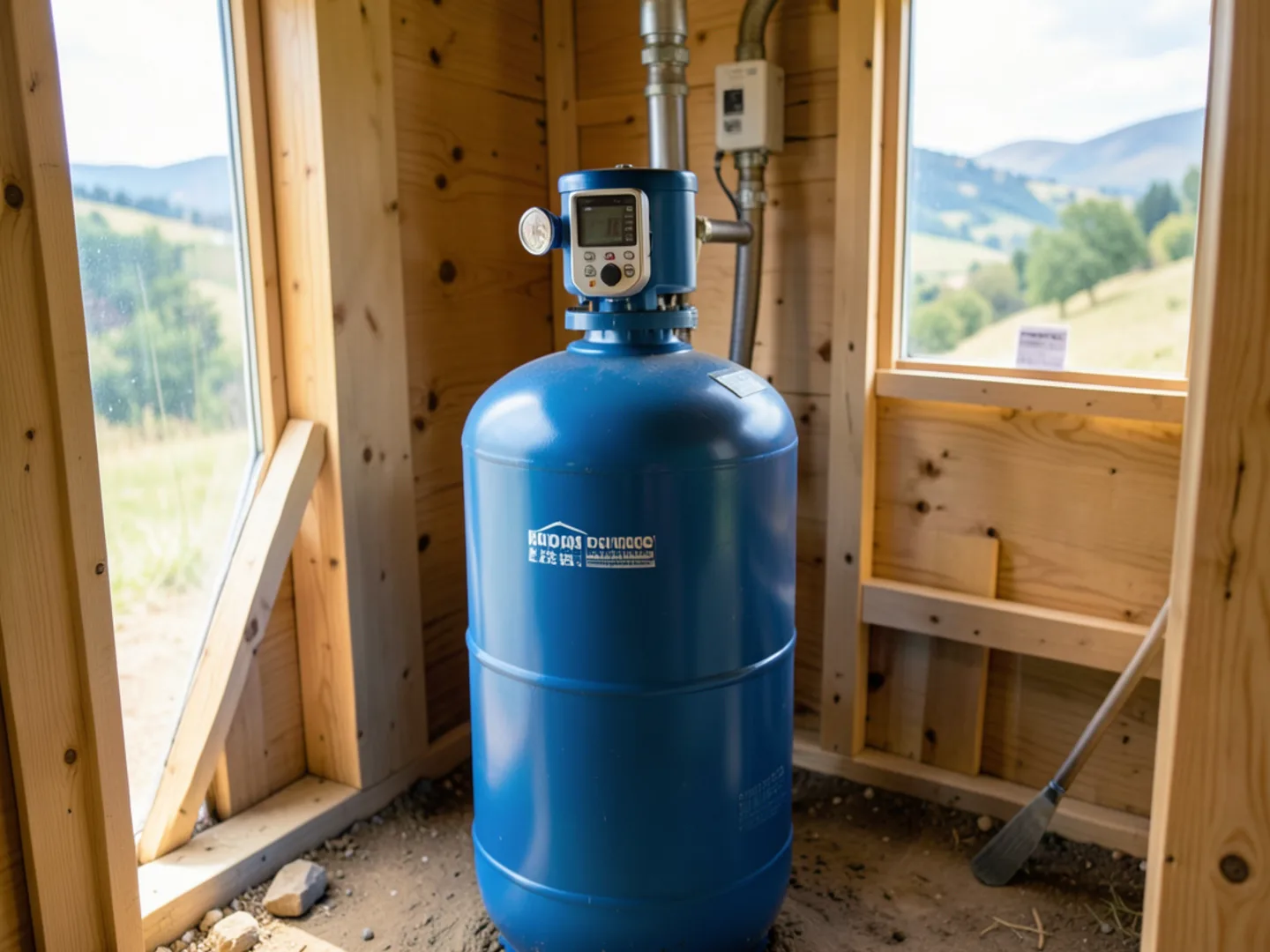
A private well property, by contrast, operates an independent miniature municipal water utility on site. A deep submersible pump suspended hundreds of feet below ground pushes water up through a drop pipe to an above-ground wellhead casing.
From the wellhead, water travels into a mechanical pressure tank equipped with a flexible butyl rubber bladder. A mechanical pressure switch monitors system pressure, cycling the submersible pump on when tank pressure drops to 30 or 40 PSI, and turning it off when pressure reaches 50 or 60 PSI. Maintaining pressure tank pre-charge and switch contacts is the sole responsibility of the property owner.
Filtration and conditioning strategies for each water source
Because municipal and groundwater systems face distinct water chemistry challenges, filtration strategies must be tailored specifically to the source. Installing a generic big-box filter without water testing often leads to premature filter fouling or unaddressed water quality issues.
For homes connected to EID district water, the primary filtration objective is chloramine removal, taste improvement, and scale defense for high-efficiency tankless water heaters. We install whole-home dual-stage carbon block filtration systems that adsorb chloramines and organic compounds while preserving beneficial water minerals without wasting water through backwashing.
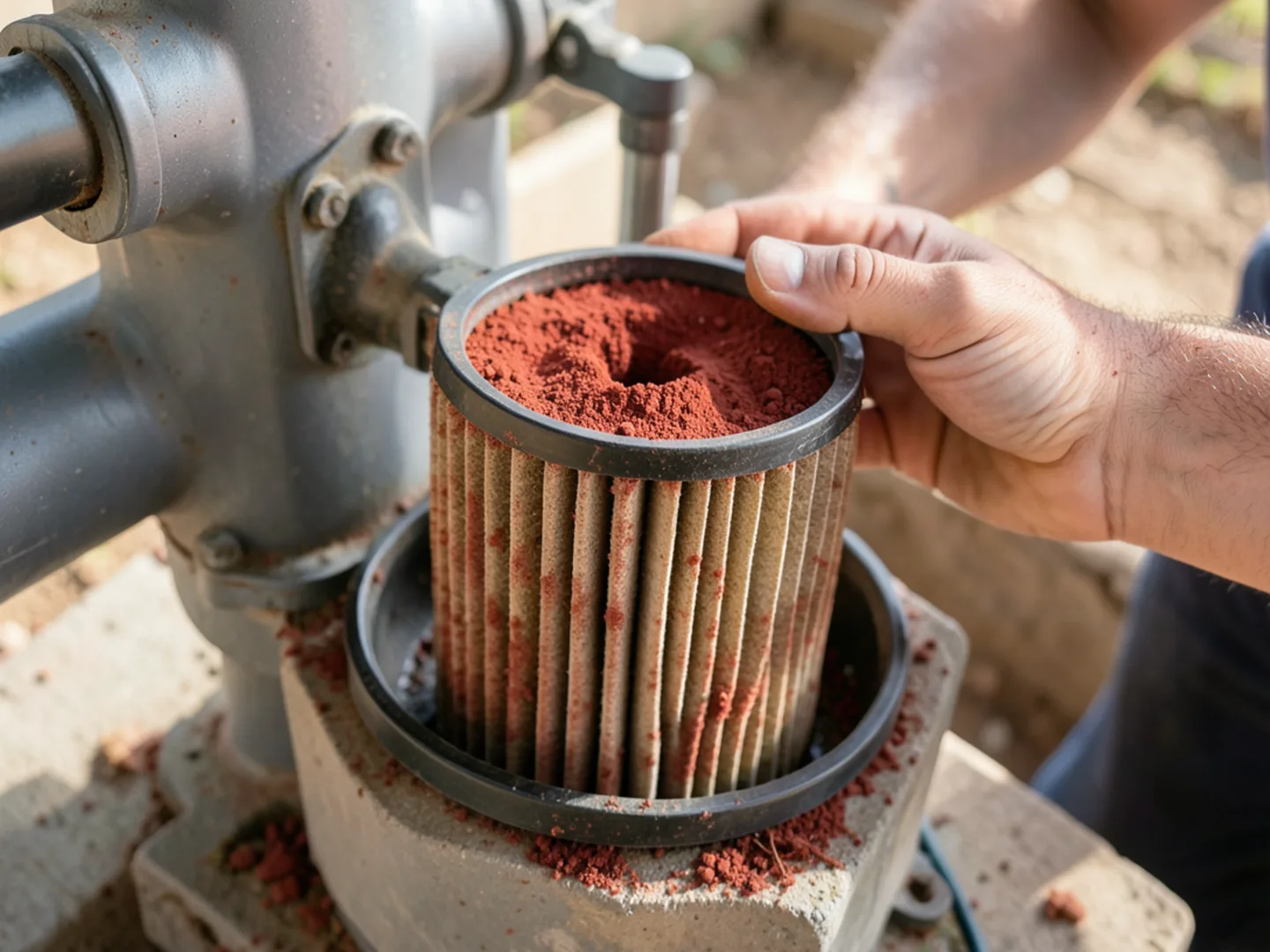
For rural foothill properties operating private wells, filtration requires a comprehensive multi-stage approach. We engineer systems featuring heavy-duty backwashing sediment filters to capture fine granitic grit; air-injection iron and manganese oxidation filters to eliminate rust staining; and ion-exchange water softeners to prevent hard calcium crusting inside water heaters, dishwasher jets, and glass shower enclosures.
Operational maintenance, emergency power and professional support
Understanding your water source directly impacts emergency preparedness. During winter atmospheric river storms in northern California, foothill high winds and fallen oak branches frequently trigger extended electrical outages. If your home connects to EID district water, gravity storage tanks keep your indoor faucets running even when the neighborhood electrical grid goes dark.
For well owners, an electrical outage immediately halts the well pump. Once the pressurized water volume inside your bladder tank (typically 10 to 30 gallons) is exhausted, all water flow stops entirely. Rural homeowners should maintain a generator connection capable of powering their 240-volt well pump control box.
Regardless of your water source, our local plumbing team provides comprehensive technical support across western El Dorado County. We perform professional water testing, pressure regulator calibration, water line repairs, and filtration design. Call our dispatch shop at (207) 419-2600 for honest recommendations tailored to your property.
Foothill Well System Buyer Inspection Checklist
- Confirm the physical location of the sanitary wellhead casing and verify it extends at least 12 inches above surface grade.
- Review the official California Department of Water Resources well completion report for total drilled depth, casing diameter, and initial yield in gallons per minute.
- Inspect the pressure tank bladder condition and cycle testing on the mechanical pressure switch (typically set to 30/50 or 40/60 PSI).
- Collect untreated groundwater samples at the wellhead for laboratory testing of mineral hardness, total dissolved solids, iron, and coliform bacteria.
- Verify auxiliary electrical disconnect switches and backup generator transfer switches to ensure uninterrupted water during foothill storm outages.
Plumber Guidance on Mineral Chemistry and Water Filtration
Many residents assume that moving from suburban El Dorado Hills to acreage in Shingle Springs or Rescue simply means leaving behind a monthly water bill. In reality, private well ownership transfers full utility responsibility directly to the homeowner. Well water in our foothill granitic aquifers carries distinct mineral signatures: elevated dissolved silica, soluble iron, and calcium bicarbonate that behave differently from surface water.
While surface water treated by the El Dorado Irrigation District requires filtration primarily to remove municipal chloramines and seasonal reservoir organic taste, well water demands heavy-duty sediment pre-filtration, dedicated iron removal media, and water softeners to protect modern tankless water heaters and delicate shower mixing cartridges.
Frequently Asked Technical Questions
Related Plumbing Services in El Dorado Hills
Schedule Foothill Plumbing Service
Speak directly with our dispatch desk on Golden Foothill Parkway at (207) 419-2600. Clean, code-compliant workmanship.