
Managing high water pressure on El Dorado Hills hillside lots
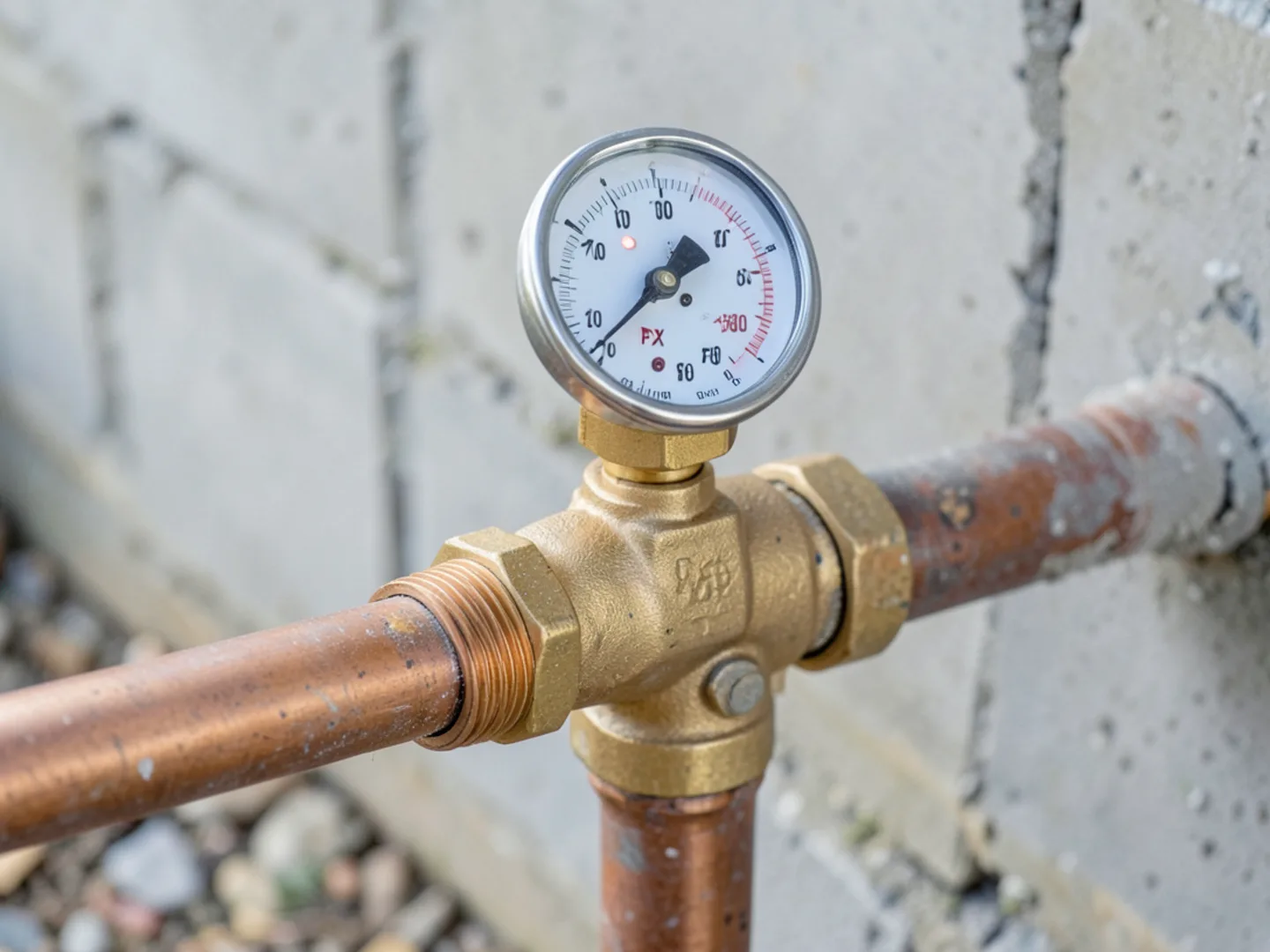
Steep foothill elevation drops turn municipal gravity water lines into high-pressure torrents exceeding 140 PSI. A calibrated pressure reducing valve protects your indoor plumbing from catastrophic leaks and premature appliance breakdown.
The physics of gravity water distribution in foothill terrain
If you own a home in El Dorado Hills, Cameron Park, or anywhere along the western Sierra foothills, your water supply is shaped by gravity. The El Dorado Irrigation District (EID) stores potable water in high-elevation distribution reservoirs and elevated steel storage tanks perched atop regional ridge lines. This elevated storage guarantees uninterrupted reserve capacity for municipal fire protection and seasonal consumer demand.
Water exerts approximately 0.433 pounds per square inch of downward force for every vertical foot of elevation drop. When municipal supply lines travel down from a hilltop storage tank at 1,300 feet down into a canyon parcel or valley cul-de-sac at 850 feet, that 450-foot elevation difference creates immense physical pressure. At the street curb, static water pressure often measures between 120 and 160 PSI.
While heavy municipal ductile iron mains and high-volume fire hydrants thrive under this pressure, residential copper, PEX, and fixture brass are not designed to handle unchecked hydraulic force. The California Plumbing Code establishes a strict ceiling of 80 PSI for indoor domestic water distribution. Without an operating pressure reducing valve, your home absorbs the full brute force of the downhill water column.
Need Immediate Plumbing Advice?
Speak directly with our local dispatch desk on Golden Foothill Parkway at (207) 419-2600.
How a pressure reducing valve moderates municipal supply
A pressure reducing valve (PRV)—frequently called a water pressure regulator—is a bell-shaped brass mechanical valve installed on your main incoming water riser, typically situated right below your front exterior hose bib or inside an accessible garage alcove. Inside the heavy brass body, a spring-loaded diaphragm counteracts the force of incoming street water, restricting the flow orifice to maintain a stable, calibrated downstream pressure.
Quality residential PRVs installed across our region feature internal bypass mechanisms that allow expanding hot water to flow backwards into the public main under controlled conditions. This bypass prevents hydraulic pressure buildup when your water heater heats cold water inside a closed piping network.
Because PRVs endure constant mechanical friction, the internal rubber diaphragm, stainless steel spring, and brass seat degrade over time. In western El Dorado County, where reservoir water carries natural mineral sediment, internal valve components experience wear within 7 to 12 years. Regular pressure testing ensures your home does not silently operate under damaging pressure surges.
Warning signs of creeping water pressure and regulator failure
Pressure regulator failure rarely happens with an instant explosion. In most foothill properties, the valve fails gradually through a condition called pressure creep. The internal diaphragm develops microscopic tears or the seat becomes calcified, allowing high street pressure to bleed slowly past the regulator during hours of zero water use.
When you wake up in the morning and turn on a bathroom faucet, you might hear a brief aggressive blast of water that settles into normal velocity after two seconds. That initial burst is direct evidence that overnight static pressure equalized with the municipal street main.
Other warning signs include loud water hammer shuddering through wall cavities when modern appliances shut off; toilet fill valves that whistle or intermittently run; drippage from your water heater’s temperature and pressure relief valve; and micro pinhole leaks developing in 1990s-era copper plumbing beneath your concrete foundation.
Protecting water heaters, appliances and indoor fixtures
Modern residential appliances utilize rapid-closing electric solenoid valves to regulate water intake. Washing machines and dishwashers cycle water on and off dozens of times during a single wash cycle. When incoming static pressure exceeds 90 PSI, the instantaneous closure of a solenoid valve sends hydraulic shockwaves traveling backward through your piping at over 4,000 feet per second.
This hydraulic shock—known in the trade as water hammer—stretches flexible rubber braided supply lines, loosens solder joints at elbow turns, and fractures plastic intake valves on expensive kitchen and laundry equipment. Over several months, repeated shock cycles lead to catastrophic flex line ruptures that flood multi-story homes.
Storage water heaters suffer severely under unregulated pressure. As cold water heats from 50 degrees to 125 degrees Fahrenheit, it expands by approximately two to three percent. On closed plumbing loops with backflow preventers or check valves, this thermal expansion drives internal tank pressure past 150 PSI, causing the safety relief valve to discharge scalding water or cracking the inner glass lining.
Calibrating and replacing pressure reducing valves to code
When an existing pressure regulator fails, replacement must adhere to California Plumbing Code standards. Our licensed plumbers remove the worn unit, inspect the incoming water riser for sediment accumulation, and install a lead-free commercial brass regulator with integrated union connections for future serviceability.
We test and adjust the new valve using precision digital liquid gauges, setting operating pressure to 60 to 65 PSI. This setting delivers strong, comfortable shower volume while ensuring generous safety margins below the 80 PSI code limit.
If your home has a closed plumbing system created by a backflow preventer or pressure regulator with a check valve, we evaluate your thermal expansion tank. An expansion tank absorbs the increased volume of heated water, keeping pressure completely flat throughout water heater heating cycles. Call our dispatch desk at (207) 419-2600 to schedule professional water pressure diagnostic testing.
Five-Step Homeowner Water Pressure Audit
- Purchase an inexpensive 0–200 PSI oil-filled test gauge with female hose threads from a hardware store.
- Thread the pressure gauge directly onto an outdoor hose bib located closest to your main water service riser.
- Ensure all indoor faucets, washing machines, irrigation controllers, and ice makers are completely shut off.
- Open the hose bib valve fully and observe the static needle reading on the gauge face.
- Verify that static household pressure rests between 55 and 70 PSI; any reading over 75 PSI requires pressure reducing valve service.
Trade Insights on Multi-Level Foothill Pressure Balancing
When residential lots drop 40 to 80 vertical feet between the street meter and the foundation, static head pressure increases significantly before water ever enters your living space. In neighborhoods like Serrano and The Promontory, street mains operated by the El Dorado Irrigation District frequently deliver between 120 and 150 PSI to guarantee adequate fire hydrant flow.
A single residential pressure regulator valve (PRV) installed at the street riser absorbs intense hydraulic friction day and night. Homeowners frequently assume their plumbing is secure because faucets flow normally, unaware that internal diaphragms degrade over 7 to 10 years. Once the internal spring weakens, line pressure creeps up to street levels during low-usage overnight hours, straining water heater relief valves and toilet fill assemblies.
Frequently Asked Technical Questions
Related Plumbing Services in El Dorado Hills
Regional Foothill Service Areas
Schedule Foothill Plumbing Service
Speak directly with our dispatch desk on Golden Foothill Parkway at (207) 419-2600. Clean, code-compliant workmanship.